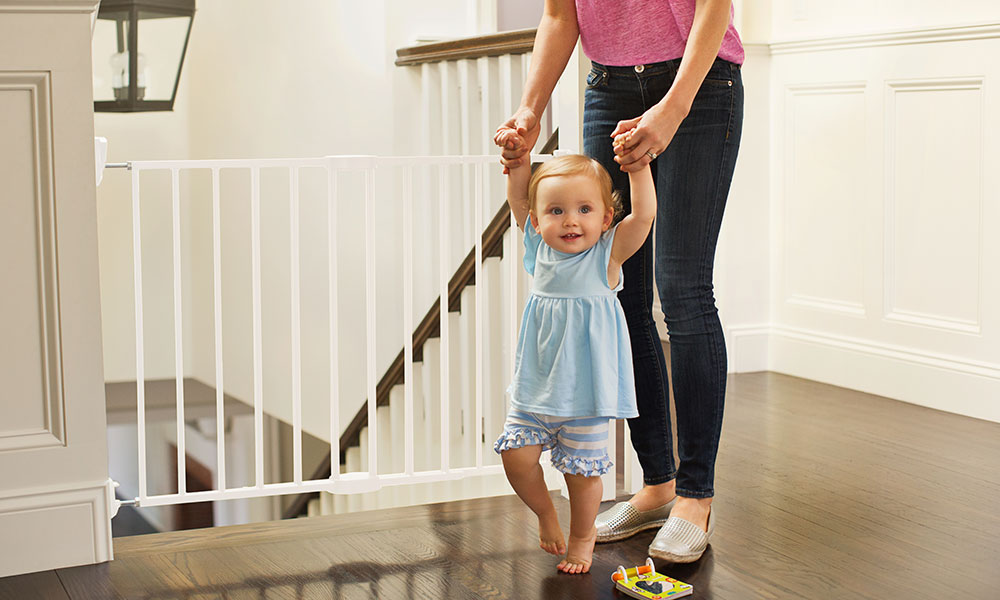
One of the biggest moments in your little one’s life is when they first start scrawling. The world opens up to them, and every corner of your home suddenly becomes a new adventure waiting to be explored.
It’s all fun and games until you spot your tiny tinker heading at speed towards Fido’s water bowl – with your excitable pup right there, ready to join in the fun! Sound familiar? For families with babies and pets, creating safe spaces for everyone is a must.
Luckily, for “pawrents” of babies and fur babies, there’s an easy answer: a baby gate. Baby gates aren’t just for babies – they’re perfect for your four-legged friends, too. Whether you’re looking to protect your dog from tumbling down the stairs or just want to keep the peace between your little one and their furry siblings, understanding the different types of pet gates for stairs and pet gates for doorways is crucial.
Today, we’ll look at how to use a baby stair gate for pet-proofing, cover common challenges families face when managing both babies and pets and explore practical solutions for creating effective boundaries between babies and pets.
Why use a pet gate for stairs and doorways?
A pet gate for stairs can come in incredibly handy when you need to keep pets and babies in separate areas of the house. Whether it’s dinner time, naptime, or those early days of crawling and wobbling about, having a barrier in place helps avoid any stressful or risky run-ins.
These gates create safe spaces where your little one can explore without a curious pooch or cat getting underfoot – without excluding your furry friend. While pet gates for large dogs often need to be more heavy-duty than baby gates, most standard baby gates will work well as pet gates for doors.
Gates can turn a room into a quiet space for naps or a no-go zone during messy baby meals. And when you’ve got a physical barrier in place, it makes it much easier to teach both pets and babies where they can (and can’t) go.
Can you use a baby stair gate as a pet gate for stairs?
Baby gates are made with safety in mind, which is why they’re such a great choice for keeping both babies and pets in check. The same features that stop curious toddlers from wandering where they shouldn’t also work a treat for keeping your pets in check and setting healthy boundaries at home.
Baby-proof latches are tricky for little hands (and paws!) to open but super easy for adults to manage. They’re built to last, too, and made from sturdy materials that can handle babies pulling themselves up or dogs leaning against them.
While we would definitely recommend using a baby gate as a pet gate, we wouldn’t suggest using a pet gate as a baby gate. To make them as safe as possible, baby gates must be built to strict safety standards, but pet gates don’t have to follow those same rules – meaning they could be unsafe for little ones.
Choosing the right gate height
Choosing the right gate height is important when you’re juggling (not literally – we hope!) both babies and pets. You want to stop your dog from getting into the baby’s play area and keep curious little ‘uns from toddling into the dog’s space, where a toy or dirty food bowl might cause more drama than you bargained for.
Even smaller dog breeds can surprise you with their jumping ability, and before you know it, your baby’s climbing like a little monkey, too – which means tall pet gates for dogs are a must-have to keep everyone safe.
Here’s a quick guide based on your dog’s size:
- Small dogs (10kg or less) – Think Chihuahuas, Yorkshire Terriers, or toy poodles. A standard height baby gate between 61 – 76cm tall usually works well. A pressure-mounted gate, like our Lindam extending gate, will usually be enough for these breeds – plus, they’re easy to install without drilling into walls.
- Medium dogs (10 – 25kg) – This includes popular breeds like Beagles, Cocker Spaniels, and Border Collies. These dogs can be a bit more energetic, so go for a sturdier gate, ideally between 76 – 91cm, like the Munchkin auto close gate. Wall-mounted options give added stability if your dog tends to lean or paw at gates.
- Large dogs (over 25kg) – If you’ve got a Labrador, German Shepherd or similar, you’ll want an extra-tall gate (91cm or more) with strong, durable construction – such as the Munchkin easy fit plus tall gate. Wall-mounted gates are particularly ideal here, especially on staircases or in high-traffic areas.
Gate features to look out for
When you’re choosing a gate that works for both your little one and four-legged friend, keep these features top of mind:
- One-hand operation latches – a must-have when you’re carrying a baby but still need to get through quickly without leaving the gate open.
- Auto-close mechanisms – great for those moments when you’re juggling a million things and need the gate to shut itself reliably.
- Double locks – an extra layer of security to keep both clever pets and curious toddlers out.
- No step-over bar – especially safer for staircases since there’s no bar to trip over, reducing the risk of falls for both babies and pets.
Durability is key in homes with both babies and pets since these gates see plenty of daily wear and tear. Look for a pet gate for doorways that can adjust in width to fit different spaces but still stay strong against pushes or leans from either side.
In the end, choosing the right pet door gate for dogs is all about balancing safety, convenience, and comfort for your whole family. With the right gate in place, you can create secure spaces where both your little one and your furry friend can thrive – giving you peace of mind and a happier home.
For more information on baby stair gates, take a look at our comprehensive guide full of installation tips and advice on choosing the right baby gate. If you’re after more parenting tips and tricks, browse our blog or tune into the latest episode of the StrollerCoaster podcast.
Leave a Reply