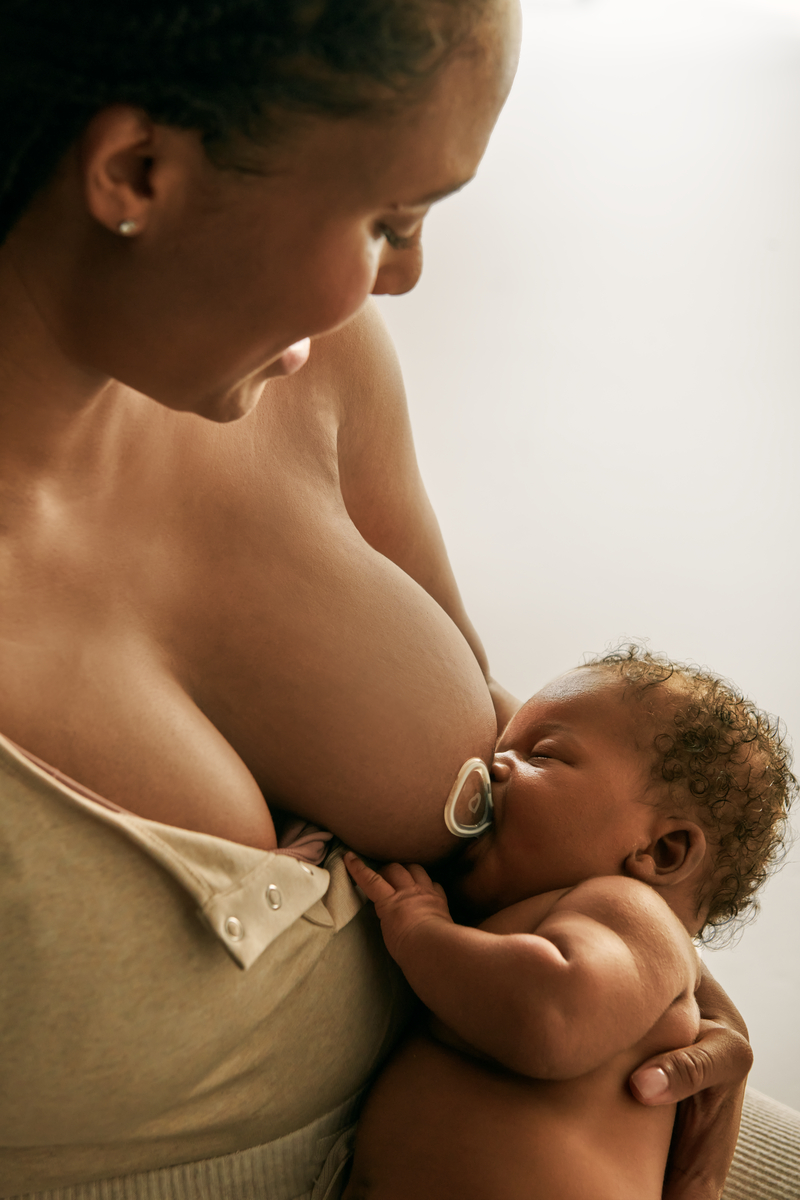
Having your first baby is…a lot, and you’re not expected to have all the answers, especially when it comes to feeding. Baby feeding schedules are learnt, so consider this your safe space to find out all you need to know…
We’re here to answer many common questions like:
- How often shall I feed my baby?
- What’s the right amount of milk for feeding?
- What can I feed my baby (solids)
- Should I wake my baby to feed?
It’s important to note that babies have unique needs, depending upon their age, size and appetite. Therefore, an important general rule is to listen to their hunger and fullness cues, rather than setting a strict schedule or amount of food.
Our guide will take you through your baby’s feeding needs in the first year of their wonderful life!
Listen to more tips for your first year as a parent on our podcast!
Feeding a newborn (0-2 months)
Newborns typically eat 8 to 12 times in a 24-hour period, roughly every two to three hours. Feeding should be ‘on demand’, or whenever your baby seems hungry.
- Most breastfed newborns eat every two to three hours
- Formula-fed newborns tend to eat every three to four hours.
Should I wake my 1-2 month old baby to feed?
Definitely! While your little one might look cosy asleep, they’ll be even more grateful once fed (though they might not show it!). It’s recommended to wake your baby after 4 or 5 hours of sleeping if they don’t wake up on their own. After the first month, they should wake up on their own.
Look out for early hunger signs as a cue to wake your baby:
- Lip smacking
- Turning their head to search for a nipple
- Putting their hands up to their mouth
How much expressed milk to feed a baby
If you’re bottle feeding, you can measure out exactly how much your baby needs, but breast feeding can be a little more ambiguous.
The Munchkin Flow Nipple Shield + is designed to help breastfeeding parents gain confidence. It features a unique, patented channel that allows you to see your breast milk flowing, showing breastfeeding patterns and the colour and consistency of your milk. Made of soft-touch silicone to mimic skin-to-skin contact, it helps your baby latch whilst protecting your nipples. The Flow Nipple Shield + Starter Kit also includes a cleaning syringe and a travel case that doubles as a steam steriliser.
Use our quick table below as a guideline of how much to feed your baby:
| Breast Milk | Formula | |
| 0-24 hours |
|
|
| 72 hours |
|
|
| 1 week |
|
|
| 2-8 weeks |
|
|
| 2-3 months |
|
|
| 3-5 months |
|
|
| 6 months |
|
|
Introducing solids (6 months and beyond)
Keen to know when you can start to feed your 6 month old baby? Most babies are ready to start solids around 6 months of age…any earlier and they might not have developed the necessary skills.
(You can read more about Meghan Mckenna’s unique experience weaning her baby Landon, here!)
Look for signs of readiness such as good head and neck control, sitting up without support, losing the tongue-thrust reflex (which automatically pushes food out), and mastering the grabbing skill.
Start with 1 to 2 tablespoons two times a day, of puréed fruits, vegetables, and iron-rich foods. Nutritious options for 6-9 months include iron-fortified single-grain baby cereal, pureed vegetables, fruits, and meats, plus soft finger foods. Some experts recommend introducing just one new food at a time, waiting three to five days before introducing another, to help identify possible allergic reactions or digestive issues.
Remember, breast milk or formula remains the primary food source for the entire first year. At 6 months, solids are a supplement to help your baby explore new textures and flavours. By this age, babies commonly stretch the time between feedings to every four to five hours, consuming up to 8 ounces of milk per feeding.
As your baby begins their weaning journey, Munchkin offers a range of feeding products designed for this transition, such as the Stay Put™ Suction Bowls and Plates (which stick securely to highchairs to prevent spills) and White Hot™ Spoons (which warn if food is too hot).
Great soft foods for babies
Vegetables
Soften them by cooking, then mash or blend to a suitable texture!
- asparagus
- avocado
- broccoli
- butternut squash
- cabbage
- carrots
- cauliflower
- courgette
- green beans
- kale
- parsnips
- peas
- peppers
- spinach
- swede
Fruit
Mash or blend soft fruits, for harder fruits, cook beforehand:
- apples
- bananas
- blueberries
- kiwi
- mango
- melon
- nectarines
- oranges
- papaya
- peach
- pears
- pineapple
- plums
- raspberries
- strawberries
Carbs
Carbohydrates can be cooked and mashed, or blended. Cereals can be mixed with breast milk or formula.
- baby rice
- bread
- chapatti
- cornmeal
- maize
- millet
- oatmeal
- oats
- pasta
- pitta bread
- porridge
- potato
- quinoa
- rice
- sweet potato
- toast
Proteins
Proteins are suitable from 6 months, and contain other nutrients like iron and zinc, which are great for babies. For eggs, make sure you buy ones stamped with the British Lion stamp mark.
- beans
- beef
- chicken
- egg
- fish (no bones)
- lamb
- lentils
- pork
- pulses, such as chickpeas
- tofu
- turkey
Dairy
Pasteurised dairy foods like full-fat yogurt and cheese are suitable from 6 months. Whole pasteurised (full-fat) cows’, goats’ or sheeps’ milk can be used in cooking or mixed with food from 6 months, but not as a drink until your baby is 12 months old.
What to feed your baby from 9-12 months
Not so little anymore!
By 9 to 12 months, about half of your baby’s calories should come from solid food and the other half from breast milk or formula. Babies should still be getting about 7 to 8 ounces of milk per feeding. Growing infants tend to enjoy exploring new flavours, and this is a great time to offer baby-friendly nibbles from your plate. They’ll continue to rely on milk until their first birthday. Ensure foods are prepared safely, avoiding small, round, hard foods that can be choking hazards.
Use the general rule, but the key is in listening to your little one.
As your baby grows, their needs will change. Stay close and observe their cues. Tracking nappies is a great way to monitor and quell any motherly worries! There’s no shame in asking questions and learning along the way.
And for more advice on breastfeeding, check out our other guides.
Looking to learn on the go? Listen to our podcast, wherever you are, in the car, strolling with the stroller or otherwise!
Leave a Reply