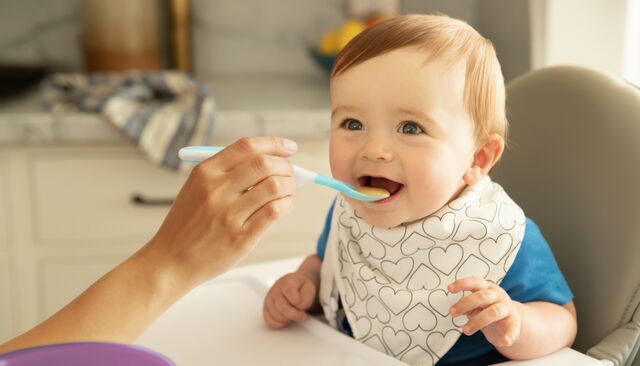
Isn’t it wild how quickly time flies with a newborn? Six months ago, you were googling “How often should newborns eat?” and now you’re standing in the baby food aisle, overwhelmed by jars of mysterious orange and green purées, wondering whether to make your own or use ready-made (spoiler: both are perfectly fine).
Your baby’s graduated from those early days of just milk to becoming a tiny food critic with very strong opinions about texture and flavour. You know what that means: it’s time to master the art of spoon-feeding!
Spoon feeding is a big parenting milestone – the moment your little one starts trying real food for the first time, with you in the driver’s seat, gently introducing them to soft purées and new textures, one tiny spoonful at a time.
In this guide, we’ll walk you through everything a new parent needs to know: when to start spoon feeding, how to spoon feed a newborn (including how to spoon feed breast milk to a newborn if that’s needed), and when it might be time to let your baby take the reins. We’ll also answer common questions like, “Can I spoon-feed a 3-month-old?” and “How many spoon feeds does a 6-month-old need?”
What is spoon feeding?
Spoon feeding, also known as traditional weaning, is the classic way of starting solids, where you lead the way by offering your little one soft foods using a spoon. It usually begins with smooth purées, then moves on to lovely mashed-up foods and different textures that suit your little one’s stage of development.
Unlike baby-led weaning, where babies dive straight in with finger foods (a practice that we’ve covered in our guide to best baby-led weaning foods), spoon feeding lets you control portion sizes and make sure your little one gets a proper variety of nutrients.
The brilliant thing about spoon feeding is that it creates those precious bonding moments between you and your baby, lets you keep an eye on how much they’re actually eating, and gives you the chance to introduce loads of different flavours gradually.
When to start spoon-feeding
Wait until your baby is around six months old before starting spoon feeding – when they’re showing those key signs they’re ready for solids. Keep an eye out for good head and neck control, the ability to sit up with some support, and interest in what you’re eating.
Can you spoon-feed a 3-month-old? Generally, it’s way too early for solids at three months unless a healthcare professional advises otherwise for specific medical reasons. At this stage, your baby’s digestive system isn’t quite ready – and they haven’t developed the motor skills needed to eat safely.
Can you spoon-feed a 4-month-old? Some little ones might get curious about food around four months, but most experts recommend holding off until closer to six months. The NHS advises breastfeeding or formula feeding until six months to ensure your baby gets the best nutrition while their motor and sensory reflexes develop.
Curious about what spoon-feeding looks like in real life? Take a look at Megan McKenna’s experience introducing solids to her son, along with her go-to feeding essentials.
How to spoon-feed a newborn
When we talk about spoon-feeding newborns, we usually mean giving them expressed breast milk or formula – not solids just yet. This comes in handy if your little one’s having trouble latching or needs extra care after medical stuff.
To spoon-feed breast milk to a newborn, first sterilise a soft plastic spoon in the same way you would a bottle. Gently express your milk straight onto the spoon, or pour a little expressed milk into a sterile container and dip the spoon in.
Hold your baby upright, supporting their head and neck, then touch the spoon to their lips and give them a moment to take the milk. DO NOT pour the milk straight into your baby’s mouth; instead, let them lick or sip it at their own pace – it definitely takes patience! Let your little one take their time, give them plenty of breaks, and watch out for when they’re full.
How to start spoon-feeding solids
Starting your spoon-feeding journey is all about being prepared, staying patient, and picking the right moment. Try to choose a time when your baby’s alert and happy but not absolutely ravenous. Mid-morning tends to be a good shout for lots of families.
Keep it simple to begin with: smooth, single-ingredient purées like sweet potato, carrot, or parsnip are perfect first options. Start with just a teaspoon or two. Use a soft-tipped weaning spoon, like Munchkin’s white hot safety spoons (which is also great for ensuring your baby’s food is the perfect temperature), that’s gentle on their gums – and make sure they’re sitting securely in a baby or toddler high chair.
Let your baby hold the spoon before you offer any food, as this gives them time to explore and get familiar with it. If your baby turns their head or pushes food out with their tongue, that’s their way of saying they’ve had enough.
Remember, those first feeds are more about them learning how to eat solids and exploring new textures rather than actually eating. And yes, expect it to get messy – that’s part of the fun!
How many spoon feeds a day at 6 months?
When you’re first starting out at around 6 months, just one spoon-fed meal a day is plenty. At this stage, solids are just a gentle introduction – milk is still doing most of the hard work when it comes to nutrition.
As your baby gets more confident with spoon feeding over the next few weeks, you can gradually build up to two meals a day, then three by around 7 to 8 months (on top of their usual milk feeds.) Don’t worry if their appetite changes from one day to the next – every baby is different, so the key is to follow their cues and go with the flow.
When to stop spoon-feeding a baby
Most parents taper off spoon feeding at around a year, although all babies develop at their own pace. It’s not uncommon for some little ones to start trying to self-feed at 9 months, while others may need a bit more time and stick with the spoon longer than a year. The transition tends to happen gradually.
Many families find a mix of spoon-feeding and picky finger foods works best during this phase. You might notice your baby trying to grab the spoon, showing more excitement about feeding themselves or losing interest in purées. These are all great signs that they’re ready to take a bit more control.
That said, there’s no need to ditch the spoon overnight. You can still offer spoon-fed meals for things like yoghurt or porridge and even give them their own spoon to explore while you offer little bites. Now it’s their turn in the driving seat, so follow their lead and give them time to explore.
Ready to make mealtimes a little easier (and a lot more fun)? Explore Munchkin’s range of baby feeding essentials – designed to support every stage of your weaning journey. Plus, don’t miss out on the latest episode of the StrollerCoaster podcast for tips, tricks and honest chats about the highs and lows of parenting.
Leave a Reply