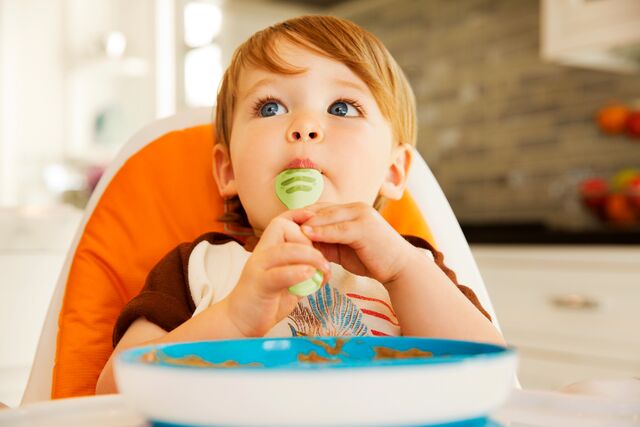
Don’t worry, you are not the first parent to get a shiver down your spine at the prospect of weaning, and you certainly won’t be the last! We understand, but many parents forget that weaning is a gradual process. It’s not a race, and you definitely won’t need to purchase a whole army of fancy gadgets to make it happen.
To help you navigate the process with confidence, we’ve broken it all down for you in this guide. Let’s get started!
When should I start weaning my baby?
The general recommendation is to start weaning around the six-month mark, but there’s no ‘special date’ to go off. The key factor here is readiness. Every baby is different, and this is really where those parental instincts will come into play. After all, you know your baby best!
How do I know if my baby is ready to start weaning?
Luckily, it’s not all guesswork. There are a few tells you can begin to look for:
- Increasing Hand-eye-mouth coordination: You might notice a growing interest in food and even some attempts to reach out and put it in their mouth.
- Good head and torso control: They should be able to sit up and hold their head steady.
- Ability to swallow: This essentially means they stop pushing food out with their tongue, an instinct you may see referred to as the ‘extrusion reflex’.
It’s important to keep in mind that every baby develops at their own pace, so if your little one isn’t ready yet, that’s perfectly fine!
How to start weaning?
So, your child is ready, and you’re officially onto the next step! The first week you start weaning is all about taking those teeny, tiny, baby steps you’ve become familiar with, and simply introducing new flavour and textures. Some days, they might even just lick or taste rather than actually eating huge portions, and that’s perfectly normal!
Different types of weaning
There are a few different approaches that you can take:
- Traditional weaning: You may also see this being referred to as spoon-led weaning. Here, you start with smooth purées offered on a spoon, before gradually moving on to soft solid foods. Finger foods are then introduced at a later date.
- Baby‑led weaning: With this approach, you largely skip the purées, instead offering soft finger foods from the start. This way your little one can feed themselves and go at their own pace.
- Combination weaning: As the name suggests, the combination approach mixes the two, using spoon‑fed purées alongside self‑fed finger foods – sometimes in the same meal.
It is important to remember that there is no correct approach, just see what works best for you and your baby!
Your first weaning meal
It’s time for that exciting first meal! Here’s a simple walk-through we’ve put together to make starting weaning stress-free:
- Start with milk: Don’t start weaning your baby on an empty stomach, instead begin with breast or formula milk.
- Introduce solids: This can be about 30 to 60 minutes after the milk. Things like soft fruit and veg are best here.
- Exploration: It may go against all you have been taught, but playing with food is actually great in this scenario! Let them explore, and make mealtimes something they can look forward to. A suction cup, such as these, are a good way of keeping any mess to a minimum here.
- Watch for signs of fullness: If your baby is starting to turn their head away or begins clamping their mouth shut, then it’s time to stop!
Your baby isn’t interested? No problem! It’s normal, just try again tomorrow. A fun method to encourage your child is to sit them at the table with you. They’ll enjoy copying you, and it’s a great way to create memories for all the family!
Your 7-day weaning plan
Alright, you now know how to tackle a meal, so a week is just a matter of repetition. Just remember that milk still comes first, and the solids are just for practice! Here’s a loose outline you can follow:
- Day 1+2: Offer 1 to 2 spoons of mashed, soft vegetables (think broccoli, sweet potato, or carrots). Try this once a day.
- Day 3+4: Add a second veg or just repeat favorites. You can also start introducing soft fruits, such as pears.
- Day 5+7: Keep mixing the veggies and fruit. Stick to just once a day, although if your little one seems eager, you can try adding in a small, second meal.
Of course, every baby is different so if one step takes longer or shorter just adjust your pace.
What do I need for weaning?
Let’s be honest, you don’t need a whole ton of special gear for your baby to start eating, existing kitchen items and a couple of key essentials to ensure safety will do the job.
As we have highlighted, not every day will be a success, so it would be worth stocking up on storage containers to ensure nothing goes to waste. These Munchkin Snack Catchers are a great choice for avoiding mess at mealtimes, or storing some treats when you’re out and about.
When the idea of feeding your baby a slippery chunk of pear through flailing arms makes your stomach drop, something like a fresh food feeder can really help ease those nerves. It’s designed so you can put a small piece of food into a mesh pouch, allowing your little one to explore safely without any choking hazards.
The Love-a-Bowls Toddler and Baby Bowls are another great option for avoiding any accidents, with high sides and soft-tip spoons there to get you through mealtimes with minimal mess and a happy child (and parent!). Plus, you have the option to go further with a Munchkin bundle for the complete set.
Weaning doesn’t have to be overwhelming!
With a simple plan and a few key tools, you have all you need to take on that first week with confidence. Just enjoy this milestone, because you’ve got this! Take a look at our blog for more advice including the next step of self-feeding, or check out our site for all your baby essentials.
Leave a Reply